Anglicanism

More Elizabeth II coverage: Washington Post goes deep on her Billy Graham contacts

More Elizabeth II coverage: Washington Post goes deep on her Billy Graham contacts

Confession: I am still paying next to zero attention to American telly when it comes to rites linked to the death of Queen Elizabeth II. I’m tuned into BBC World and, via YouTube, streaming Sky News.

The few times I’ve flipped over to the major U.S. networks left me with the same impression as before — that the Royal Family is viewed as kind of a cleaned-up version of the Kardashians, with the queen as a sad, nobel celebrity matriarch. See this earlier post: “Elizabeth the Great: Why do many journalists choose to edit faith out of her Christmas talks?

I think the big gaps (other than details about her faith) have been any sense of (a) the gravitas added by her World War II service, including her work driving an Army ambulance. Also, it’s poignant that, (b) until the stunning abdication of King Edward VIII, she was raised with zero expectation of becoming queen. This relatively normal childhood (until age 10) created tight ties to her parents and shaped her views on family.

Yes, the BBC has had a very heavy emphasis on the admiration for the queen seen in mainline, establishment churches and minority faiths. At some point I would like to know if the admiration for Elizabeth II common among American evangelicals also exists in the UK. Click here for a roundup of that, including these typical remarks from Bishop Andrew Forster of the Church of Ireland:

"Throughout her life she set Christ, and his message and his teaching, as the primary thing that has helped her and blessed her and I think made her into the incredible monarch, sovereign that she was."

Bishop Forster described the late Queen as the "grandmother of the nation".

"Maybe it was because people understood that she had an understanding of some of the issues that we might face behind closed doors, some of the issues of increased frailty, of family strife — there was that sense of a grandmotherly figure who understood the challenges of life," he said.

In my previous post, I noted that a Washington Post feature about the queen’s “most memorable remarks” that said her public appearances were “peppered with words of wisdom, faith and occasionally personal reflections.” There was content about her Christmas messages, while omitting any faith content.

However, the religion desk — veteran Sarah Pulliam Bailey (a former GetReligion contributor) — went in depth on one of the most interesting religion-news angles from the queen’s long life: “Fact checking ‘The Crown’: Queen Elizabeth’s faith and her close relationship with preacher Billy Graham.”

Please respect our Commenting Policy

Plug-In: Five newsworthy faith facts about the life and work of Queen Elizabeth II

Plug-In: Five newsworthy faith facts about the life and work of Queen Elizabeth II

When news broke Thursday of Queen Elizabeth II’s death at age 96, I immediately consulted with the leading expert of her 70 years on the throne I know: my wife, Tamie. Seriously, I texted my bride of 32 years.

“Yes, I’ve been watching,” she replied. “The news and social, that is.”

A few years ago, Tamie, a fellow writer, sent the queen a letter and received one back in an enveloped stamped “Royal Mail” from Buckingham Palace.

“She never sat for an interview, so a few documentaries are the closest thing to hearing her asked/answering questions,” Tamie told me. “I thought it was worth writing to tell her how much I enjoyed it, and this response came a few weeks later on her behalf.”

“The Queen wishes me to write and thank you for your card and very kind message,” the reply said.

Did Elizabeth actually see my wife’s letter? Tamie has no way of knowing. I’m a skeptical journalist, so I’m guessing not. But it’s cool to imagine that she did.

In the meantime, here are five facts about religion in the life of Elizabeth, who wrote the foreword to a 2016 British Bible Society book titled “The Servant Queen and the King She Serves” (that king being Jesus):

(1) She was the official head of the Church of England.

The Associated Press obituary by Danica Kirka, Jill Lawless and Sylvia Hui explains:

In Britain’s constitutional monarchy, the queen is head of state but has little direct power; in her official actions she does what the government orders. However, she was not without influence. The queen, officially the head of the Church of England, once reportedly commented that there was nothing she could do legally to block the appointment of a bishop, “but I can always say that I should like more information. That is an indication that the prime minister will not miss.”

(2) She spoke openly about her Christian faith.

Writing for Religion News Service, Catherine Pepinster notes:


Please respect our Commenting Policy

Elizabeth the Great: Why do many journalists choose to edit faith out of her Christmas talks?

Elizabeth the Great: Why do many journalists choose to edit faith out of her Christmas talks?

The Queen is dead. God save the King.

It’s hard to edit the religion content out of that equation. However, when journalists are asked to deal with the death of the queen who was, it can be argued, the most famous woman of the past 100 years, there are plenty of important, “real,” issues to deal with other than the state of her soul and her Christian faith.

I spent most of yesterday afternoon and evening watching the BBC Global coverage of the death of Queen Elizabeth II, as opposed to, shall we say, American “telly.” The BBC focused on the death of one of the greatest, if not “the” greatest, monarchs in Great Britain’s history. There were many references to her Christian faith. American television, for the most part, offered discussions of the death of a great celebrity. If I have been too harsh with that judgment, please send me some quality URLs.

How to approach this totally justified tidal wave of coverage? I think the easiest way to search out the religion-beat content is with two specific online searches.

First, search Google News for “Queen Elizabeth” and “Christmas.” Elizabeth the Great was known, of course, for her dignified and timely Christmas addresses — an essential part of the season for Brits and those who love all things British. The vast majority of the mainstream-media obits for the queen contain references to her Christmas talks — sort of.

What did she say in these very personal messages? That’s the key.

This leads to my second Google News search, for “Queen Elizabeth” and “Christian.” This is where the mainstream press — unless I have missed something, somewhere — offer, well, something like this. In the religious press, readers will find many, many pages of content, such as this feature from Premier Christianity, a niche UK religion website: “Queen Elizabeth II served Christ.”

There was, however, this Washington Post feature with a hopeful title: “Queen Elizabeth II, in her own words: Her most memorable remarks.” After all, it did include a section with this title: “Annual Christmas speeches.” These talks were, readers are told, “peppered with words of wisdom, faith and occasionally personal reflections from the nonagenarian.” However, this is what the Post offered:

“In the old days the monarch led his soldiers on the battlefield and his leadership at all times was close and personal. Today things are very different,” she said in her first televised Christmas broadcast in 1957. “I cannot lead you into battle, I do not give you laws or administer justice but I can do something else, I can give you my heart and my devotion to these old islands and to all the peoples of our brotherhood of nations.”


Please respect our Commenting Policy

Some trends in global Anglican Communion are starting to look rather Black and White

Some trends in global Anglican Communion are starting to look rather Black and White

There was nothing unusual about Nigerian Archbishop Henry Ndukuba leading the 2021 dedication rites for Holy Trinity Cathedral Church, which was packed with Nigerian Anglicans and a dozen or so bishops.

But this historic service was held in Houston and the cathedral is not part of the Diocese of Texas or the U.S. Episcopal Church. Some clergy at this Church of Nigeria North American Mission event were recognized as Anglicans by the Archbishop of Canterbury. Some were not.

This puzzle became more complicated recently during Lambeth 2022, which Nigeria boycotted, along with the churches of Uganda and Rwanda. Other Global South bishops, during Lambeth standoffs with Archbishop of Canterbury Justin Welby over the status of doctrines on marriage and sex, declined to receive Holy Communion with openly gay and lesbian bishops.

"There is a profound asymmetric quality to the Anglican Communion, where the voice of the bulk of its membership is either absent or muted," said the Rev. David Goodhew of St. Barnabas Church in Middlesborough, England. He is the author of a series of articles about African Anglicanism for Covenant, the weblog of The Living Church, an independent Anglican publication founded in 1878.

"If one adds up the number of bishops who didn't share Holy Communion at Lambeth … that is a very large number," he said. "I have been startled by the number of descriptions that said this Lambeth was a success. I don't know how one makes that claim when it would appear the bulk of the Anglican Communion's bishops couldn't come together to receive Communion. That looks like a disaster."

Bottom line: Global South Anglicans are experiencing a "volcano of growth" and remain "at loggerheads" with the shrinking churches of the United Kingdom, North America and other western nations. While most Global South bishops serve growing flocks -- roughly 75% of active worshipers in the 77-million-member Anglican Communion -- many western bishops lead what Goodhew called "micro-dioceses" with under 1,000 active members or "mini-dioceses" with fewer than 5,000.

The Church of Nigeria, meanwhile, claims 17 million members and the Center for Global Christianity at Gordon-Conwell Seminary, near Boston, estimates active participants at 22 million. The other churches skipping Lambeth 2022 were Uganda, with 10 million members, and Rwanda, with 1 million members.

The Church of England remains Anglicanism's power hub. It has 26 million members, but 2019 weekly attendance was about 679,000 -- before the COVID-19 crisis.


Please respect our Commenting Policy

At Lambeth 2022, many Anglican bishops could not 'walk together' to the altar

At Lambeth 2022, many Anglican bishops could not 'walk together' to the altar

While Canterbury is urging Anglicans to keep "walking together," the 2022 Lambeth Conference demonstrated that many of the Anglican Communion's bishops can no longer even receive the Eucharist together.

Doctrinal conflicts over biblical authority and sexuality have raged for decades, with growing churches in the Global South clashing with the shrinking, but wealthy, churches in England, America and other Western regions. During this 12-day conference, which ended Sunday (August 8), conservatives from Africa, Asia and elsewhere declined to receive Holy Communion with openly gay and lesbian bishops. Several provinces -- including the massive Church of Nigeria -- boycotted Lambeth 2022 altogether.

"For the large majority of the Anglican Communion the traditional understanding of marriage is something that is understood, accepted, and without question, not only by bishops but their entire church," said Archbishop of Canterbury Justin Welby, in a mid-conference address. "To question this teaching is unthinkable, and in many countries would make the church a victim of derision, contempt and even attack."

Bishops in the Anglican minority, he added, "have not arrived lightly at their ideas. … They are not careless about Scripture. They do not reject Christ. But they have come to a different view on sexuality after long prayer, deep study and reflection on understandings of human nature. For them, to question this different teaching is unthinkable."

Throughout Lambeth 2022, the Global South Fellowship of Anglican Churches -- representing about 75% of Anglican church attendance -- pushed to reaffirm a 1998 Lambeth resolution that "homosexual practice" is "incompatible with Scripture," while also urging Anglicans to "oppose homophobia." It stressed centuries of doctrine that "sexuality is intended by God to find its rightful and full expression between a man and a woman in the covenant of marriage, established by God in creation, and affirmed by our Lord Jesus Christ." That earlier resolution passed with 526 votes in favor, 70 opposed and 45 abstentions.

Writing to Lambeth participants, Welby said the "validity" of that resolution "is not in doubt" and that the "whole resolution is still in existence."

However, the archbishop did not allow a vote on the issue and he said he would not, as requested by Anglican primates in the past, discipline the unorthodox.


Please respect our Commenting Policy

Podcast: Anglicans in liberal West and conservative Global South face broken communion -- again

Podcast: Anglicans in liberal West and conservative Global South face broken communion -- again

This week’s “Crossroads” podcast was recorded (live on radio and then edited) this past Wednesday afternoon and it is already a bit out of date (CLICK HERE to tune that in).

You see, this episode was intended as a kind of “walk-up” feature about press issues at the 15th Lambeth Conference of Anglican bishops from around the world (July 26-Aug. 8) in Canterbury. At that point, there wasn’t much coverage to critique, other than some reports the Guardian, as in: “Justin Welby forced to allow Anglican bishops to reject statement on sexuality.” Since then, Religion News Service has released this: “Same-sex marriage sparks divisive debate at twice-delayed Lambeth Conference.”

As you can see, the coverage — so far — has been shaped by a familiar template in which decades of Anglican warfare is reduced to a rather political fight over homosexuality, as opposed to church doctrines about biblical authority and sex outside of traditional marriage.

The twist in this old, old story is that most of the heroes in the press coverage are White progressives from rich First World nations and the villains are People of Color from the Global South (think Africa and Asia). Does that framework sound familiar to many news consumers? Hold that thought.

The podcast argued that sexuality is the popular news hook for the Anglican wars, but that the doctrinal issues at stake run much deeper. Thus, I would like to place the unfolding Lambeth 2022 drama in the context of what your GetReligionistas have long called “Anglican timeline disease.

With that in mind, let’s flash back to 1992 — that’s three decades, for those keeping score. Here is the top of the 1999 “On Religion” column I wrote about this behind-the-scenes event: “The time for broken communion?” This is long, but essential:

It's been seven years since Bishop C. FitzSimons Allison faced the fact that some of his fellow bishops worship a different god than he does.

The symbolic moment came during an Episcopal House of Bishops meeting in Kanuga, N.C., as members met in small groups to discuss graceful ways to settle their differences on the Bible, worship and sex. The question for the day was: "Why are we dysfunctional?"

"I said the answer was simple — apostasy," said Allison, a dignified South Carolinian who has a doctorate in Anglican history from Oxford University. "Some of the other bishops looked at me and said, 'What are you talking about?'"


Please respect our Commenting Policy

Ciao, GetReligion: Thanks, all, for my tenure. Critic that I am, though, here are some final thoughts

Ciao, GetReligion: Thanks, all, for my tenure. Critic that I am, though, here are some final thoughts

I’ve been a contributor to GetReligion since 2015, when founder Terry Mattingly recruited me over salad at an Annapolis mall eatery. I’m grateful that he did.

Seven years is, for me, a hefty professional run. But nothing lasts for ever. Change is constant. In short, this is my last regular GetReligion post.

During my time here I’ve noticed what I consider an imbalance in the stories GetReligion bloggers generally choose to critique. It is this: The underwhelming and frequently inaccurate religion news coverage too often offered by “mainstream media” is criticized at GetReligion on a near-daily basis. The ignorance of important religion details and the coverage’s overall poor quality are often attributed to mainstream journalists’ “secular,” or “progressive,” worldviews.

Another regular criticism is that mainstream media journalists view everything through a zero-sum political lens. This, goes the argument, renders them incapable of understanding or communicating religious complexity as it’s actually lived by believers living outside the blue-state mindset. Politics is all that really matters, is the trope.

hese broadsides are standard GetReligion fare. Importantly, the accusations are generally on target. It’s more than a coincidence that the GetReligion team members behind this website have decades of experience in the mainstream press.

Religion journalism has suffered greatly in this Internet era. Relatively few news outlets ever invested in upping their religion coverage. Today, even fewer do. Blame that on journalism’s downward economic spiral brought about by the World Wide Web explosion — a major theme here at GetReligion.

However, what’s too often missed here is criticism of the similar lackluster coverage originating in clearly conservative media. At GetReligion, conservative-market media more often than not get a pass. This is, in part, because conservative media’s most popular content is offered by right-wing commentators who make little to no effort to hide their biases and whose stock in trade is pure opinion.


Please respect our Commenting Policy

St. Anne plays a major role in papal visit to Canada: Is she important to Catholics, alone?

St. Anne plays a major role in papal visit to Canada: Is she important to Catholics, alone?

Long ago, I had a strategic and symbolic on-deadline argument with Rocky Mountain News (#RIP) editor.

Holy Week loomed on the horizon, on the Western calendar, and I was asked to fill out a form requesting quick Ash Wednesday feature art. I suggested — thinking beauty and diversity — a visit to an Episcopal parish in the heart of Denver’s most prominent Black neighborhood, a congregation known for the beauty of its high-church, Anglo-Catholic rites.

The editor said the photo needed to be in a Catholic church, since Holy Week is a Catholic story. I said that was a logical way to think about it, since the Catholic church is so prominent. However, I noted that Holy Week is an ancient Christian tradition observed in many Christian churches and denominations. It would be good to remind readers of that fact. I won that debate and the result was a stunning photograph.

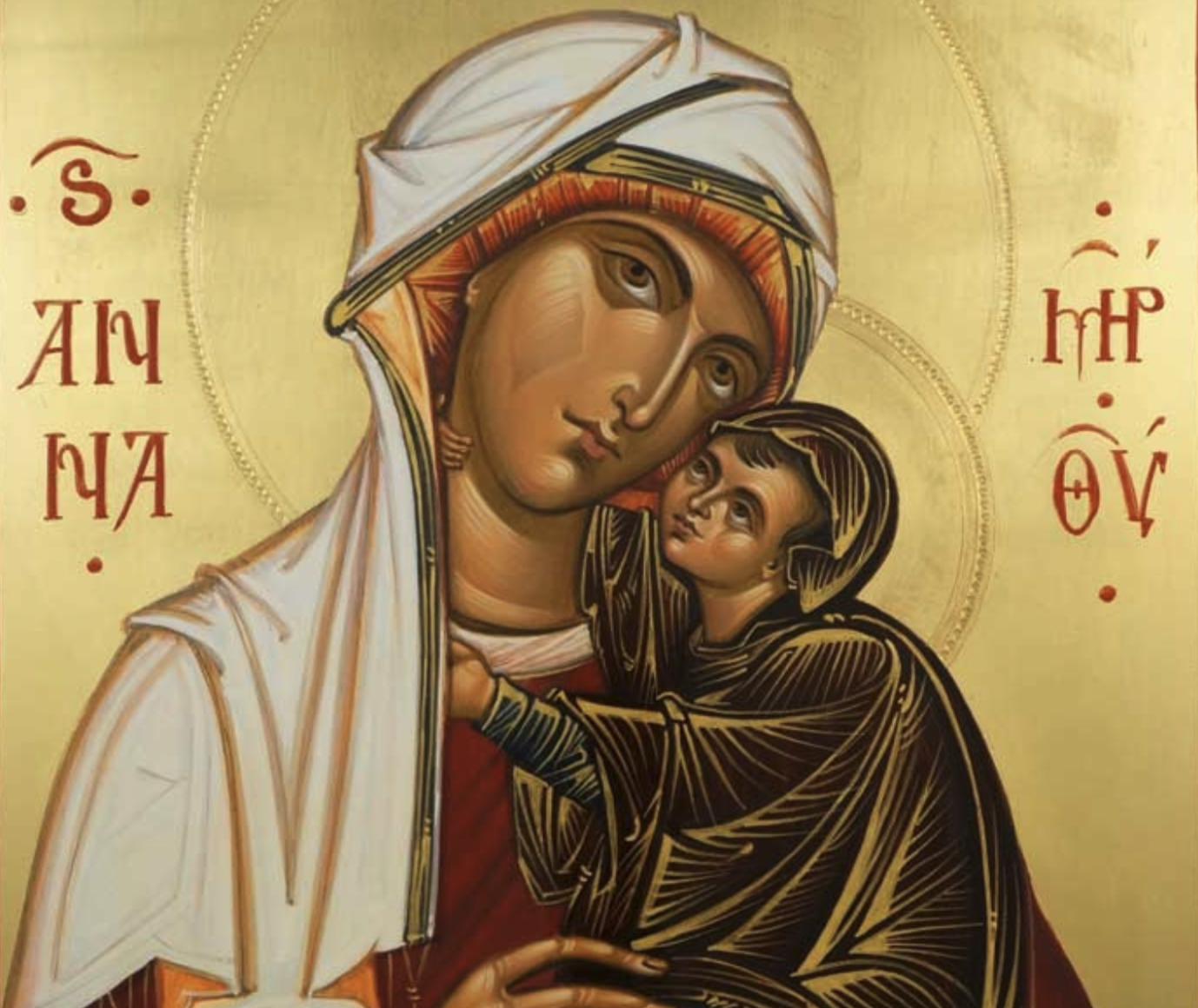
I thought of that debate when reading a timely Religion News Service piece that ran with this headline: “Who is St. Anne and why is she so important to Indigenous peoples?” Let me stress that this is a good story and a valid angle during the Pope Francis pilgrimage to Canada. I urge readers to check it out. Here is the top of that report:

When Pope Francis met with a delegation of First Nations, Métis and Inuit people in April at the Vatican, he told them he wanted to visit them in Canada this year. And not just at any time of the year, but during the Feast of St. Anne (July 26).

“I think with joy, for example, of the great veneration that many of you have for Saint Anne, the grandmother of Jesus,” Pope Francis told the Indigenous delegation to the Vatican. “This year I would like to be with you on those days.”

As the pope visits Canada through Friday (July 29), he will indeed celebrate the Feast of St. Anne in the country. He also will visit several sites dedicated to the saint, whom Catholics believe to be the mother of Mary and the grandmother of Jesus.

That last sentence includes a classic example of a statement — “whom Catholics believe to be the mother of Mary and the grandmother of Jesus” — that is certainly accurate, but it would still cause some readers to think, “Wait a minute. Aren’t there millions of other Christians who honor St. Anne for the same reasons?”


Please respect our Commenting Policy

Ukraine war savagery will loom over this year's World Council of Churches Assembly

Ukraine war savagery will loom over this year's World Council of Churches Assembly

If Russian invaders continue their current aggression, how much of Ukraine will be turned to rubble and how many innocent civilians will be dead by August 31?

That's opening day for the 11th global Assembly in the 74-year history of the World Council of Churches (WCC). COVID willing, the delegates from 352 Protestant and Orthodox church bodies will be joined by thousands of observers, including Catholic and evangelical Protestant representatives.

The WCC has gotten little media ink in North America during recent times, but 2022 sparks obvious news interest in how the organization deals with the Ukraine imbroglio at the Assembly, which runs through Sept. 8 in Karlsruhe, Germany.

Media that do original international reporting and have the money should be laying plans to staff the event, which The Guy knows from covering the 1975, 1983 and 1998 Assemblies supplies numerous trend stories and features alongside the spot news. Reporters unable to attend in person should be lining up contacts to help interpret the goings-on long distance.

This is a critical moment for the WCC, Orthodoxy and global Christian unity. The Russian Orthodox Church, some of whose leaders have made public statements hacking Vladimir Putin's war, is by far the WCC's biggest member — claiming 113.5 million parishioners plus another 30 million in its Ukraine jurisdiction and with ties elsewhere. That compares with the WCC's reported over-all church constituency of 580 million.

On Sunday, former Archbishop of Canterbury Rowan Williams all but demanded that the WCC expel the Russian Orthodox Church from membership:

“The riot act has to be read. When a church is actively supporting a war of aggression, failing to condemn nakedly obvious breaches in any kind of ethical conduct in wartime, then other churches have the right to raise the question and challenge it — to say, unless you can say something effective about this, something recognizably Christian, we have to look again at your membership.”

Also last week, Bishop Rob Schenck of America's Dietrich Bonhoeffer Institute in Washington, D.C., took to Religion News Service to promote a Ukraine petition campaign. It urges the WCC to expel the Russian Orthodox from membership over Moscow Patriarch Kirill's "unholy compact" with Russian dictator Putin.


Please respect our Commenting Policy