Episcopalians

Anglicans are wrestling with 'climate change' in their pews: Will they adapt and survive?

Anglicans are wrestling with 'climate change' in their pews: Will they adapt and survive?

Journalist Michael Kinsley famously added a twist to American politics when he redefined a "gaffe" as when "a politician tells the truth -- some obvious truth he isn't supposed to say."

As the Rev. Neil Elliot of the Anglican Church of Canada discovered, this term also applies to religious leaders.

After seeing 2018 General Synod reports, the denomination's research and statistics expert produced an analysis that included this: "Projections from our data indicate that there will be no members, attenders or givers in the Anglican Church of Canada by approximately 2040."

Reactions to his candor varied, to say the least.

"I think of it very much like … people's responses to climate change," said Elliot, updating his earlier remarks in a video posted by Global News in Canada.

Signs of church "climate" change? In the early 1960s, Anglican parishes in Canada had nearly 1.4 million members. But that 2018 report found 357,123 members, with an average Sunday attendance of 97,421. The church had 1,997 new members that year, while holding 9,074 burials or funerals.

Canada's national statistics agency reported that 10.4% of all Canadians were Anglicans in 1996, but that number fell to 3.8% in 2019.

People have one of three reactions when faced with these kinds of numbers. The first "is denial. People are saying, 'We're, we're … It's not happening,' " said Elliot, while counting the options on one hand. "Then there's people who say, 'We can stop it.' And then there's people who say, 'We can adapt.'

"The adapt language is much more rare and I'm only starting to hear it on the media in the last few months. … That's what I'm trying to get us to do within the Anglican church. It's, 'How do we adapt to it?' not, 'How do we stop it?' or … people burying their heads in the sand."
Please respect our Commenting Policy

Variations on old questions: What do U.S. churches believe on transgender issues?

Variations on old questions: What do U.S. churches believe on transgender issues?

THE QUESTION:

What do U.S. churches believe on the transgender issue?

THE RELIGION GUY'S ANSWER:

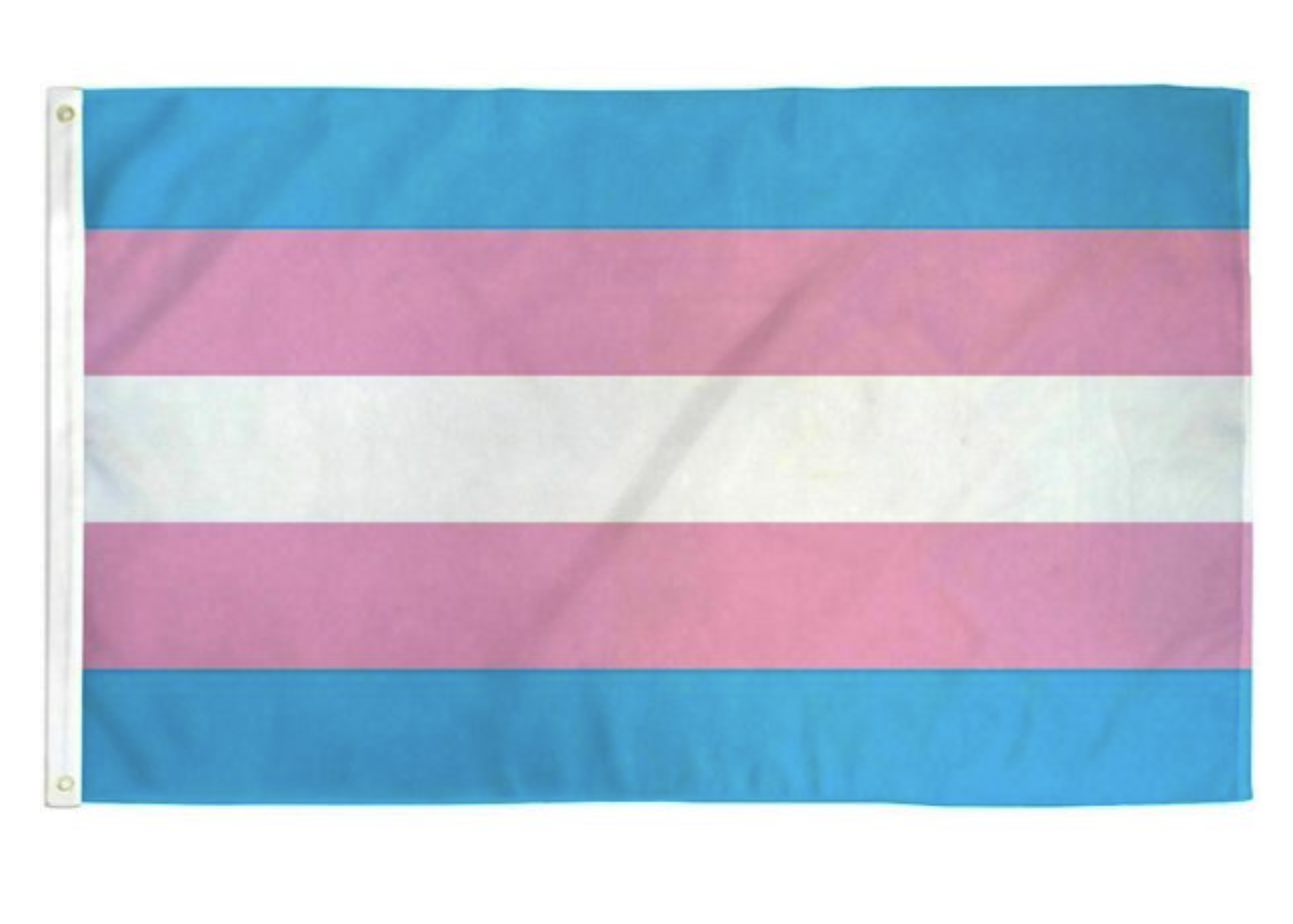
As with American society at large, churches' consideration of the sensitive transgender issue emerged only recently and rather suddenly, compared with their decades-long-debate over whether to leave behind the Christian tradition against sexual activity in gay and lesbian relationships. The religious implications go well beyond political agitation over "bathroom bills," athletic competition or women's shelters.

Transgenderism is part of a broader gender-fluidity movement. A recent survey by the interfaith Religion News Service asked readers to identify themselves as either female, male, transgender, trans woman or MTF, trans man or FTM, intersex, questioning, non-binary, genderqueer, gender fluid, agender or "other."

Among theologically flexible "Mainline" Protestants, a key breakthrough was the Evangelical Lutheran Church in America's September installation of Megan Rohrer of California, its first transgender-identified bishop. Rohrer was barred from the clergy until a 2009 policy change, so was originally ordained by the independent Extraordinary Lutheran Ministries, which works for full LGBT inclusion. (Oddly, that organization suspended Rohrer from membership in December over alleged and unspecified "racist words and actions.")

The United Methodist Church is expected to split this year over the older same-sex disagreement, exactly 50 years after the first floor debate at a governing General Conference. In October, religious media reported the gender transition of the formerly "cisgender" Methodist pastor married to Peggy Johnson, the just-retired bishop for eastern Pennsylvania, Delaware and eastern Maryland. But last month Indiana Methodists removed Pastor Craig Duke from his congregation over drag queen shows and drag education to express solidarity with his daughter, who identifies as pansexual.


Please respect our Commenting Policy

Old, nagging conflicts will continue to dominate religion news in the coming year

Old, nagging conflicts will continue to dominate religion news in the coming year

Yes, there will be a hotly contested U.S. election in 2022. And pretty much every secular and religious faction is keyed up awaiting the U.S. Supreme Court's decision on whether to revise or revoke its rulings that legalized abortion.

Big decisions like this typically land in late June.

Other lingering disputes on the news coverage agenda include the following.

* As the U.S. Senate struggles with a rewrite of the Catholic President Joe Biden's elephantine social-spending bill, the Catholic bishops' conference vehemently opposes any inclusion of abortion funding.

The bishops, along with Orthodox Judaism's synagogue union, also fear (.pdf here) this law will cripple funding for widespread religious preschools. In yet another church-state debate, Biden hopes to end religious exemption from anti-discrimination rules, which went into effect in January.

* Inside the world of Mainline Protestantism, the unending dispute over the Bible and LGBTQ+ issues may produce the biggest U.S. church split since the Civil War at the United Methodist Church's General Conference. Early in 2022, a commission must decide whether the twice-postponed conference, now scheduled for August 29-September 6 in Minneapolis, can finally occur despite two years of COVID-related snarls and, some say, stalling by the UMC establishment.

* The T in LGBTQ won new Methodist attention as just-retired Pennsylvania Bishop Peggy Johnson and her husband, a Methodist pastor, publicized the latter's gender transition while identifying publicly as a "cisgender" male.

Last March, a sizable body of U.S. conservatives announced plans to leave the denomination and unite with former mission churches overseas — primarily in Africa and Asia — to form the "Global Methodist Church," led temporarily by Virginia Pastor Keith Boyette (540-898-4960).


Please respect our Commenting Policy

Lessons learned from black-and-white visions of Christmas past -- movies from 1940s

Lessons learned from black-and-white visions of Christmas past -- movies from 1940s

It's a black-and-white movie Christmas, with snow falling as joyful families mingle on city sidewalks while window-shopping -- buying food, presents, decorations and fresh-cut trees for festivities that are only two days away.

For Americans, this scene represents the ghost of Christmas past, long before suburban malls, big-box scrums and Amazon.com. And as "The Bishop's Wife" opens, an angel -- a graceful Cary Grant -- enters this 1947 tableau, smiling at carolers and children and helping the needy and lost.

"Christmas is always in danger in Christmas movies -- we'd have no reason to make such movies otherwise," wrote critic Titus Techera, executive director of the American Cinema Foundation. In this classic movie, "we have a remarkable concentration of problems in one household: A man's faith, his family, community and church … are all tied together."

It isn't unusual to find miracles, tight-knit communities, glowing churches and parables about human choices, temptation, sin and redemption in old Christmas films, said Techera, contacted by Zoom while visiting Bucharest.

That's why Techera -- a native of Romania, before his work brought him to America -- has written four online essays about the lessons learned from watching '40s movies that were remade in the '90s. The other films in this Acton Institute series are "The Shop Around the Corner," "Miracle on 34th Street" and "Christmas in Connecticut."

There's a reason many modern Americans keep watching these movies, he said. Some yearn for a time before most Americans became so isolated, separated by jobs far from extended families, sprawling suburban neighborhoods and all the paradoxes built into digital networks that were supposed to keep people connected.

"What we see in these movies is a time when Christmas was a far less commercial celebration and there was quite a bit of continuity with traditions from the past. … For many, the church was part of that," he said. "Christmas was a family thing. It was a community thing. … Commerce was more subservient to ordinary life. Commerce had not taken over all of life, including Christmas."


Please respect our Commenting Policy

Modernized New Revised Standard Bible is surefire news, landing amid today's language wars

Modernized New Revised Standard Bible is surefire news, landing amid today's language wars

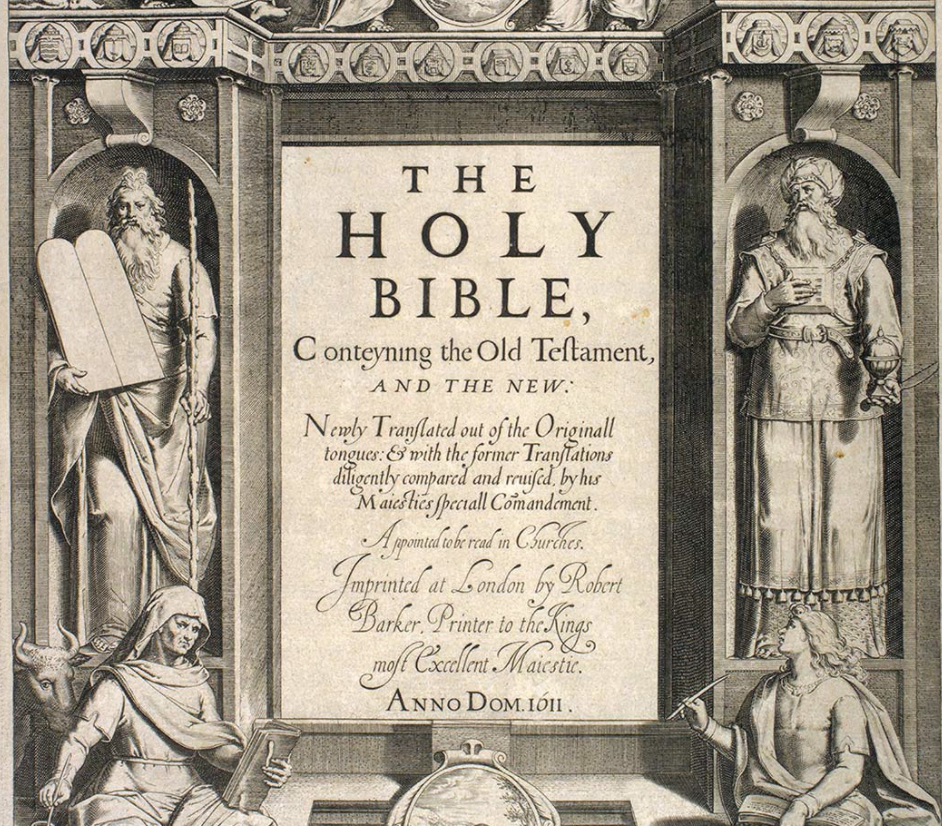
As religion writers (and historians) know, the 1611 King James Version of the Bible begat the 1952 Revised Standard Version, which begat the 1989 New Revised Standard Version which now begets the new "Updated Edition" of the NRSV.

It’s the "NRSVue" — a surefire news topic. This Bible will be available in ebook format by Christmas and in print around next May 1.

Media might issue advance articles about this production or wait for reactions to the complete text from reviewers or local clergy and parishioners. A 36-page media memo provides an advance look, accessible here. For further queries contact Friendship Press at info@friendshippress.org or CEO Joseph Crockett at joseph@frienshippress.org.

The NRSV copyright is held by the National Council of Churches, a cooperative body of the “Mainline” Protestant and Orthodox denominations. It assigned this rewrite to the Society of Biblical Literature, a professional guild of university and seminary scholars, whose 63-member team made approximately 12,000 "substantive" changes and thousands more that are trivial. The team consulted African-American church leaders, a group said to be "historically excluded" from prior Bible translation projects.

The result "improves" upon the original NRSV policy "to eliminate masculine-oriented language when it can be done without altering passages that reflect the historical situation of ancient patriarchal culture." The church council says both of its versions seek to be "as free as possible from the gender bias inherent in the English language."

A typical example is saying "brothers and sisters" when the original Greek literally said only "brothers" but was referring generally to people of both genders. The update omits footnotes that specify what the Greek said. Plural pronouns will abound, which depending on the translation can occasionally make the antecedent unclear or miss the direct force of a singular pronoun. In the rewrite, the Bethlehem "wise men" are now "magi."

Both the 1989 and 2021 renditions leave language about God undisturbed. "He" is still permitted and He remains the "Lord" and "Father."


Please respect our Commenting Policy

Many like to speculate: What was the biblical 'thorn in the flesh' that plagued St. Paul?

Many like to speculate: What was the biblical 'thorn in the flesh' that plagued St. Paul?

THE QUESTION:

What was the biblical "thorn in the flesh" that so plagued St. Paul?

THE RELIGION GUY'S ANSWER:

We'll never be sure. But the question is perennially fascinating.

"Thorn in the flesh" is one of many commonplace phrases we take from the Bible. It appears in 2 Corinthians chapter 12, where St. Paul writes that he knew "a man" -- modestly referring to himself -- who was "caught up into Paradise and heard things that are not to be told." He describes the aftermath of his powerful experience in verses 7-9:

To keep me from being too elated, a thorn was given me in the flesh, a messenger of Satan to torment me, to keep me from being too elated. Three times I appealed to the Lord about this, that it would leave me, but he said to me, “My grace is sufficient for you, for power is made perfect in weakness.” So, I will boast all the more gladly of my weaknesses, so that the power of Christ may dwell in me. (New Revised Standard Version)

Other English translations say "arrogant," "conceited," "lifted up," "proud" or "exalted" instead of "elated."

Christians through history have pondered what so plagued this New Testament writer and Christian founder (though we can imagine his close colleagues knew). Some say it was a interior spiritual or psychological challenge, while others see opponents, obstacles or persecution his pioneer missionary work coped with.

Many focus on the telltale word "flesh" and insist it must have been some physical malady.


Please respect our Commenting Policy

A lion of evangelical Anglicanism -- seeking Christian unity -- elects to swim the Tiber

A lion of evangelical Anglicanism -- seeking Christian unity -- elects to swim the Tiber

As always, rumors swirled around the favorites in the 2002 race to become the 104th Archbishop of Canterbury.

Efforts to derail Bishop Michael Nariz-Ali of Rochester were different, in part because he was born in Pakistan -- fluent in Urdu and Farsi -- and was poised to become the first non-white leader of the Church of England. Others noted that he attended Catholic schools as a boy and practiced that faith.

Progressives warned that Nazir-Ali was too conservative on issues dividing Anglicans. He opposed the ordination of noncelibate gays and lesbians, while defending ancient teachings on marriage. He was a fierce critic of Sharia law and "radical Islam," while defending persecuted Christians around the world Most of all, critics noted that he was a strong evangelical leader in the global Anglican Communion.

Nazir-Ali insisted that he was "evangelical and Catholic," even as he lost his shot at the Throne of Canterbury.

That's the same label that he used when he stunned the Anglican world by announcing that he was returning to Roman Catholicism. He is expected to be ordained as a Catholic priest this Sunday (Oct. 30), serving in the Ordinariate of Our Lady of Walsingham, a canonical structure established in 2011 by Pope Benedict XVI that allows Anglicans to enter Catholicism while retaining many Anglican rites and traditions. The 72-year-old Nazir-Ali is married and has two children.

This move was necessary "because I believe that the traditional Anglican desire to adhere to the fullness of apostolic, patristic and conciliar teaching can now best be maintained in this way," the former bishop announced.

Writing in The Daily Mail, he called the decision a "bittersweet moment."

"Bitter, because I am deeply saddened that the Church of England is not the church I joined. There are many individual parishes, priests, and believers who remain committed to biblical faith and values. But as an institution it seems to be losing its way," he said. "Sweet, because I am excited about the opportunities that joining the ordinariate will bring: to uphold human rights and help millions of suffering Christians and others round the world."


Please respect our Commenting Policy

Death of a post-theist shepherd: The unorthodox faith of Bishop John Shelby Spong

Death of a post-theist shepherd: The unorthodox faith of Bishop John Shelby Spong

Newark Bishop John Shelby Spong never stuck "Why Christianity Must Change or Die" on the doors of Canterbury Cathedral, since it was easier to post a talking-points version of his manifesto on the Internet.

"Theism, as a way of defining God is dead," he proclaimed, in 1998. "Since God can no longer be conceived in theistic terms, it becomes nonsensical to seek to understand Jesus as the incarnation of the theistic deity."

Lacking a personal God, he added, it was logical to add: "Prayer cannot be a request made to a theistic deity to act in human history in a particular way."

Spong's 12-point take on post-theism faith emerged after spending years on the road, giving hundreds of speeches and appearing on broadcasts such as "The Oprah Winfrey Show" and "Larry King Live." While leading the Episcopal Diocese of Newark, within shouting range of New York City, he did everything he could to become the news-media face of liberal Christianity.

By the time of his death at the age of 90, on Sept. 12 at his home in Richmond, Va., Spong had seen many of his once-heretical beliefs -- especially on sex and marriage -- normalized in most Episcopal pulpits and institutions. However, his doctrinal approach was too blunt for many in the mainline establishment, where a quieter "spiritual but not religious" approach has become the norm.

Spong called himself a "doubting believer" and said he had no problem reciting traditional rites and creeds because, in his own mind, he had already redefined the words and images to fit his own doctrines. He also knew when to be cautious, such as during Denver visit in the late 1980s -- an era in which the Diocese of Colorado remained a center for evangelical and charismatic Episcopalians.

After a lecture at the liberal St. Thomas Episcopal Church, I asked Spong if he believed the resurrection of Jesus was an "historic event that took place in real time."

"I don't think that I can say what the disciples believed they experienced. I'll have to think about that some more," he said, moving on to another question.


Please respect our Commenting Policy

Future scenarios emerge as the media debate the health of U.S. Mainline Protestantism 

Future scenarios emerge as the media debate the health of U.S. Mainline Protestantism 

What has long been called “Mainline” Protestantism suffered inexorable shrinkage this past generation, eroding so much of its once-potent U.S. cultural impact that the news media tend to neglect these moderate-to-liberal churches. Yet a new Public Religion Research Institute poll reported what it argues is a sudden comeback and indicates Mainliners even outnumber the rival conservative "evangelicals" widely thought to dominate Protestantism.

True? The Religion Guy assembled devastating statistics that raise questions about that claim.

U.S. religion's hot number-cruncher Ryan Burge is even more doubtful and notes the Harvard-based Cooperative Election Study found a recent rise in Americans who self-identify as "evangelical."

As reporters ponder that debate, they should also play out longer-term Mainline scenarios, for instance for the Episcopal Church and United Methodist Church.

The hed on another Burge article proclaimed that "The Death of the Episcopal Church is Near."

"I don't think it's an exaggeration at all to believe that Episcopalians will no longer exist by 2040," he contended.

His gloomy forecast relied partly on a stark, candid piece from the blog of the Living Church magazine. It reasoned that annual marriages and baptisms foretell how the denomination will fare. If trends continue, the former would fall from 39,000 in 1980 to 750 as of 2050, and the latter from 56,000 to 2,500, over decades when average worship attendance would plummet from 857,000 to 150,000.

Similarly, in 2019 the Evangelical Lutheran Church in America's research agency projected that this now-sizable denomination would dip below 67,000 members by 2050 and average Sunday attendance would hit 16,000 by 2041. Two years before that, Wheaton College's Ed Stetzer notably warned that Mainline Protestantism has "23 Easters left."


Please respect our Commenting Policy