Race

Podcast: Is Colorado Springs covered by a 'fundamentalist' blanket of hate?

Podcast: Is Colorado Springs covered by a 'fundamentalist' blanket of hate?

At this point, there are many, many crucial facts that journalists do not know about the horrible Club Q massacre in Colorado Springs.

This lack of facts has done little to shape the coverage. We do not, for example, know if Mx. Anderson Aldrich is sincere when claiming, in case documents, to be nonbinary. It will, in the meantime, be interesting to see if many mainstream newsrooms choose to deadname Aldrich in their coverage, perhaps by striving to avoid pronouns altogether.

We do know that the alleged shooter was raised in a broken home with multiple mental-health and violence issues. Consider, for example, the father — an ex-con MMA fighter turned porn star (and a Republican, of one form or another).

At this point, it does appear that some journalists — while searching for the “why” in the “who, what, when, where, why and how” formula — have decided to place the city of Colorado Springs on trial and, perhaps, the whole state of Colorado. This was the primary topic discussed in this week’s “Crossroads” podcast (CLICK HERE to tune that in).

The key: A return of that dreaded journalism F-word — “fundamentalist.” For more background on this religion-beat disease, please see this GetReligion post by Richard Ostling (“What is 'Fundamentalism'? Name 666 or so examples from recent news coverage”) and this On Religion column (“Define ‘fundamentalist,’ please”) that I wrote in 2011.

Here is the key material from a USA Today story that, in my opinion, goes completely over the top while claiming that, to be blunt, a kind of hate cloud covers Colorado Springs. The headline: “Colorado Springs worked to change its anti-gay image — then its sole LGBTQ nightclub was targeted.”

Most notably, in 1992, religious fundamentalists from Colorado Springs wrote Amendment 2, a measure seeking to amend Colorado's constitution by making it illegal to ban discrimination based on sexual orientation. The measure was approved by Colorado voters that November, earning Colorado the nickname of the "Hate State," according to the Colorado Springs Pioneer Museum. Amendment 2 was ultimately struck down by the U.S. Supreme Court in 1996.

The city is also the headquarters of Focus on the Family, a fundamentalist Protestant organization whose founder James Dobson is known for his stances against gay and trans rights.


Please respect our Commenting Policy

Celebrities rule: How should reporters assess the name fame game in religion?

Celebrities rule: How should reporters assess the name fame game in religion?

As of the 2022 midterms, the United States had 49 million registered Democrats and 39 million registered Republicans, according to estimates from WorldPopulationReview.com.

Recent National Basketball Association and National Football League annual attendance combined came to 39 million. And last week, a religious leader named Timothy P. Broglio took charge of a U.S. organization with 67 million members.

Timothy who? That would be the archbishop who is the newly elected president of the National Conference of Catholic Bishops, who will lead the church in the U.S. through the 2024 election season and on the 2025. If you think his task is placid, note this liberal jeremiad — care of National Catholic Reporter — about his election.

Weeks before, Kristen Waggoner became a prime culture wars figure.

Kristen who? This evangelical attorney is the new president of the Alliance Defending Freedom, a legal non-profit that represents religious conservatives in matters like LGBTQ disputes, as in this critique of the Democrats’ marriage act. Her ADF is branded a “hate group” by the equally controversial Southern Poverty Law Center.

Point being that important leaders within segments of American religion are generally far less prominent than athletes, entertainers, politicians or tech billionaires. Publicity usually falls to clergy who run purchased-time broadcasts, utter political sound bites or are trapped in scandals.

Think Pat Robertson.

Things were different not so long ago when Billy Graham, and Martin Luther King Jr. and other civil rights leaders, were titanic cultural and media personalities. In an earlier time (so to speak), Time magazine would devote a cover story to Christian thinkers C.S. Lewis (1947) or Reinhold Niebuhr (1948, written by Whittaker Chambers). Presbyterian bureaucrat Eugene Carson Blake (“Can Protestants Unite?”, 1961) or U.S. Catholic Cardinals Spellman (1946) or Cushing (1964).

Since the media and the Internet are meshuga over lists (is this David Letterman’s doing?), how about a well-reported article, not about our American era’s Top 10 religious celebrities, but which ones exercise the most influence, seen or unseen?


Please respect our Commenting Policy

AP soft-pedals big story: USA progressives winning (sort of) the United Methodist war

AP soft-pedals big story: USA progressives winning (sort of) the United Methodist war

If you have followed the half century of United Methodist Church warfare over the Bible, marriage and sex — I started covering this story in the early 1980s — you know the debates have consistently contained activists in three different camps. Here’s that line-up, for newcomers:

(1) The doctrinal right fighting for enforcement of the doctrines and rules in the church’s Book of Discipline.

(2) The North American establishment that has insisted that it could find a way to tweak the status quo — doctrine would change from zip code to zip code — so that everyone could stay in the same big financial tent, including LGBTQ activists in UMC seminaries and agencies.

(3) The candid doctrinal left — think West and Northeast — that openly proclaims the need to change 2,000 years of Christian tradition to fit the doctrines of the Sexual Revolution.

These divisions only became more complex as the United Methodists evolved into a truly global denomination that included booming churches in Africa and Asia — a form of diversity that made the denomination’s shrinking North American establishment more and more nervous.

In global meetings, a small-o orthodox coalition — most of the Global South plus a conservative U.S. minority — kept winning vote after General Conference vote to defend current doctrines. However, COVID-19 prevented crucial global meetings, allowing the U.S. establishment (Camp 2) several years to steer the ship.

This brings me to a new Associated Press report that does a great job, if that was the goal, of soft-pedaling recent victories by the establishment and candid left. The headline: “LGBTQ-friendly votes signal progressive shift for Methodists.” The overture:

The United Methodist Church moved toward becoming more progressive and LGBTQ-affirming during U.S. regional meetings this month that included the election of its second openly gay bishop. Conservatives say the developments will only accelerate their exit from one of the nation’s largest Protestant denominations.

Each of the UMC’s five U.S. jurisdictions — meeting separately in early November — approved similarly worded measures aspiring to a future of church where “LGBTQIA+ people will be protected, affirmed, and empowered.”

How would these aspirations come to pass?


Please respect our Commenting Policy

Plug-In: Who were the religion-politics winners and who were the losers in '22 midterms?

Plug-In: Who were the religion-politics winners and who were the losers in '22 midterms?

America voted.

But you knew that already, so we’ll make this quick.

Big winners included abortion rights proponents and Florida Gov. Ron DeSantis, a potential 2024 GOP presidential contender.

Among the notable losers: a predicted red wave and former President Donald Trump. Alas, Trump is not one to acknowledge electoral defeat. The question becomes: Will the Republicans who’ve enabled him finally do so and move on?

Still to be decided: Georgia’s crucial U.S. Senate race, which is headed to a Dec. 6 runoff between Democratic incumbent Raphael Warnock and Republican challenger Herschel Walker. In the general election campaign, the two offered clashing religious messages, as noted by The Associated Press’ Bill Barrow.

For more insight on Tuesday’s voting, check out these religion stories:

Abortion rights scored the biggest midterm victory (by Yonat Shimron and Jack Jenkins, Religion News Service)

Republicans win on inflation but lose on abortion (by Daniel Silliman, Christianity Today)

After wins at the ballot, abortion rights groups want to ‘put this to the people’ (by Sarah McCammon, NPR)

Catholic leaders say abortion referendum results ‘does not bode well for the future’ (by John Lavenburg, Crux)


Please respect our Commenting Policy

Crazy political stuff happening in churches right now, but which events get the elite ink?

Crazy political stuff happening in churches right now, but which events get the elite ink?

It’s that time, once again. It’s time for the mainstream press to be terrified of that fact that, for millions of Americans, the content of their religious beliefs frequently has implications for what happens inside voting booths on Election Day.

This happens all the time on both the Religious Left and the Religious Right, although it appears to be more common in sermons on the political left (click here for more on that from Baptist progressive Ryan Burge).

If you have any doubts about press concerns about this issue, see this recent collection of headlines from one of those daily Pew Research Center emails about religion in the news:

* Churches are breaking the law and endorsing in elections, experts say. The IRS looks the other wayProPublica

* Virginia pastor investigated for campaigning during church services — The Associated Press

* The senator-pastor from Georgia mixes politics and preaching on the trailThe New York Times

* Black church tradition survives Georgia’s voting changes — The Associated Press

* ‘We need to make America godly again.’ The growing political influence of Latino evangelicals — CNN

* Battle for Catholic vote inflames Pa. governor’s racePittsburgh Post-Gazette

Remember that GetReligion mantra: Politics is the true faith of most elite-newsroom professionals, who — functionally — believe that politics is the only answer If you want to get something done in the real world. Politics is real. Religion? Not so much. Thus, it is logical that religious faith is important to the degree that it affects politics.

Is the blue-zip-code press more worried about political influence on the conservative side of this equation? Of course, especially this soon after an earthquake like the fall of Roe v. Wade. I would also admit that, at the moment, the stunning rise of nondenominational, independent evangelical and Pentecostal churches has made it even harder for reporters to cover what is and what is not happening in the institutions that define conservative Christianity..

This brings me to that ProPublica investigation that hit social-media the other day: “Churches Are Breaking the Law by Endorsing in Elections, Experts Say. The IRS Looks the Other Way.


Please respect our Commenting Policy

Is Hollywood afraid to be 'woke'? That's a question with moral and religious implications

Is Hollywood afraid to be 'woke'? That's a question with moral and religious implications

It’s one of the most famous quotes ever about the realities of working in Hollywood. That quote: “If you want to send a message, try Western Union.”

Of course, the Tinseltown giant who said that was Frank “It’s a Wonderful Life” Capra, a hero of ordinary people in the heartland. So what would he know about working with the woke powers that be on the left coast, these days?

I bring this up because of a fascinating New York Times lament that ran the other day with this headline: “After #MeToo Reckoning, a Fear Hollywood Is Regressing.” Apparently, progressives in Hollywood are very, very upset with the American people — think heartland folks, again — about some nasty recent returns in ratings and at the box office. Some “message” flicks are bombing.

Here’s the thesis statement: “The takeaway, at least to some agents and studio executives: We tried — these ‘woke’ projects don’t work.”

What does religion have to do with this? Very little, according to the Times (but we will get to that).

It’s clear that, to the team that produced this Times sermon, Middle America simply does not share the concerns of woke artists about systematic racism, sexual abuse and the whole diversity project in general.

Now, you can forget that “Black Panther” juggernaut in multiplexes nationwide, including red zip codes. Stunning, well-crafted Black superhero tales don’t count. Americans just aren’t lining up to watch the morality tales that Hollywood wants them to embrace. But what’s interesting — at least to me — is the degree to which the movies and big-ticket streamed TV series at the heart of this debate often contain content about religious and moral issues that, yes, are LINKED to diversity issues.

In other words, is this a new news story or the latest chapter in an old story about Hollywood’s struggles to understand the more religious and culturally conservative half of the American marketplace?

Let’s start where the Times has chosen to start — with Hollywood’s efforts to clean up its act in the wake of the Harvey Weinstein scandal, etc. Here’s the thesis about the #MeToo aftermath:

The movement led to increased diversity and representation in the entertainment industry, but now there is worry that executives have turned their attention elsewhere.

What happened?


Please respect our Commenting Policy

Podcast: Are (all) evangelicals the only folks tempted to gloss over candidates' sins?

Podcast: Are (all) evangelicals the only folks tempted to gloss over candidates' sins?

Oh my. It appears that editors at the New York Times has veered back into what could be called “evangelical voter monolith mode” once again.

I base that comment on the thesis paragraphs of a recent Times report that ran with the headline, “‘Saved by Grace’: Evangelicals Find a Way Forward With Herschel Walker.” That story was the hook for this week’s “Crossroads” podcast (CLICK HERE to tune that in). I will return to the Walker drama in a minute.

But before we go there, let’s pause and flash back to a Gray Lady report from a few months ago that ran with this headline: “As a ‘Seismic Shift’ Fractures Evangelicals, an Arkansas Pastor Leaves Home.” It’s the first half of that headline that interests us, right now. Here is some of the crucial language:

Across the country, theologically conservative white evangelical churches that were once comfortably united have found themselves at odds over many of the same issues dividing the Republican Party and other institutions. …

Michael O. Emerson, a sociologist at the University of Illinois Chicago, described a “seismic shift” coming, with white evangelical churches dividing into two broad camps: those embracing [Donald] Trump-style messaging and politics, including references to conspiracy theories, and those seeking to navigate a different way.

That’s accurate, of course. Anyone who has followed evangelical debates in the Trump era knows that the big story is rooted in tension, pain and divisions — not monolithic unity about how to approach politics.

At the same time, evangelicals are still facing a crushing binary reality when they approach election-day decisions — trying to decide, in some cases, between what they view as flawed GOP candidates and Democratic candidates whose stances on First Amendment and sanctity-of-life issues put them in a “can’t go there” category.

Evangelicals of various kinds do not agree on how to handle that, falling into camps that resemble the 2016 and 2020 national elections.

Thus, here is a flashback to my Trump-era evangelical voter typology from several years ago. When reading it this time, simply substitute “Walker” for “Trump” and apply these camps to White, Black (they exist) and Latino (they exist) evangelical/charismatic voters in Georgia.


Please respect our Commenting Policy

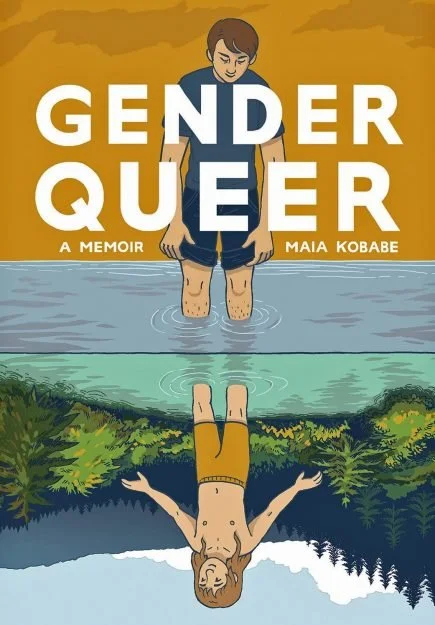
Book bans: Are these fights about a Christian nationalist plot or something else entirely?

Book bans: Are these fights about a Christian nationalist plot or something else entirely?

Ever since the Jan. 6, 2021, attempted takeover of the U.S. Capitol, journalists have been trying to find some kind of national nexus for “White Christian nationalism.”

The term, which I’m putting in quotes because its meaning is all over the map, needed a locale.

About two months ago, national media thought they had one: tiny Bonners Ferry, Idaho, where there was a dust-up between a local library and a cadre of locals who wanted certain books banned. That the locale was — in the popular imagination — is Ground Zero for conservative crazies, was no surprise.

A CNN story made the case for the book burners being newcomers with an agenda:

And who are these newcomers she speaks of? Well, we reached out to a number of the people pushing the recall and demanding that books be banned. None of them would talk to us.

But they have made their feelings known at library board meetings. “Things need to change,” one man told the board at a meeting in late August. “Otherwise, you bring curses upon yourselves. Period. From the Most High.”

Definitely a religion angle there.

And at a meeting in July, Donna Capurso, a local realtor, said this: “My job is to protect our kids from sexual deviants, who will be drawn to our library if inappropriate sexual material is on our library shelves.” Capurso is an occasional contributor to a website called Redoubt News, which caters to a growing group here in northern Idaho of self-described, “God-Fearing, Liberty-Loving Patriots.”

“The American Redoubt” is a term coined in 2011 by a Christian survivalist. The idea is that Christian patriots should retreat here from modern America to live their truth and defend themselves. The Redoubt is a large chunk of land encompassing all of Idaho, Montana and Wyoming as well as eastern slivers of Washington and Oregon.

What’s curious now is that the right-wing banned books movement (as opposed to Big Tech leaders who fight the sales of conservative books) has spread around the country — with some extra PR poured on the flames during the recent Banned Books Week.


Please respect our Commenting Policy